
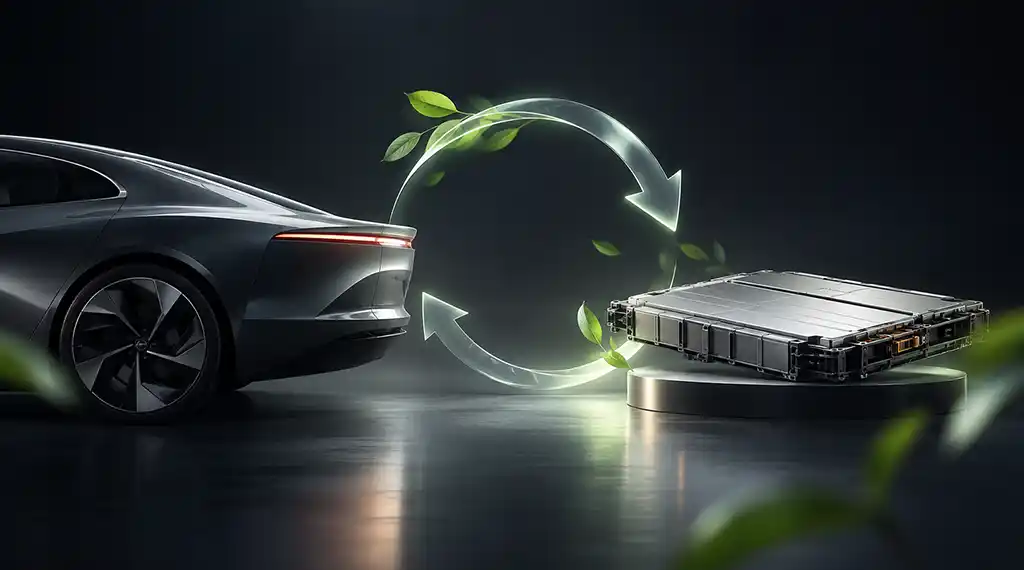
The shift of the transport sector towards zero-emission drives confronts the global economy with the challenge of handling vehicles that have reached the end of their service life. Electric vehicle recycling is a technological process that goes beyond traditional scrapping: it turns used systems and batteries into a source of valuable raw materials instead of sending them to landfill. Advanced recovery methods are essential to minimise the environmental impact of motoring across the entire product life cycle.
The European automotive market is going through changes that will lead to a sharp rise in the number of end-of-life vehicles. The rapid growth of electromobility is forcing member states to build infrastructure capable of processing thousands of tonnes of difficult waste. Traditional dismantling stations must evolve into advanced technology centres to meet strict environmental requirements. An effective system for managing e-mobility waste is becoming the foundation of Europe's raw material sovereignty, reducing its dependence on imports.
Modern electric cars are built differently from their combustion counterparts, which affects how they are processed. Manufacturers make wide use of lightweight aluminium alloys and composites, replacing heavy steel and increasing the share of copper. Battery packs account for a large part of the car's weight and require separate disposal procedures, which is why knowing how electric battery recycling works is essential for the industry. Advanced control electronics contain precious metals whose recovery makes economic sense.
The basic difference comes from high-voltage power systems, which pose a real risk to workers. Dismantling electric cars requires precise diagnostics of the battery's condition and, unlike the mechanical shredding of combustion cars, has to be carried out under protective procedures. Mishandling lithium-ion cells can lead to sudden ignition, so insulated tools are mandatory. This comprehensive approach to safety makes the process more demanding, but it is necessary to maintain environmental standards.
Batteries in electric vehicles store valuable elements that the European Union classifies as strategic. EV battery recovery makes it possible to obtain lithium, cobalt, nickel and manganese, whose natural reserves are limited. Effective Li-ion battery recycling closes the material loop and allows the same elements to be used again in the production of new cells. Critical raw materials recovered from cars through recycling help keep the supply chain stable for vehicle manufacturers.
The path of an end-of-life vehicle begins with a check of its technical condition and the removal of interior fittings and plastics. The electrical system is then safely disconnected and the battery removed, after which the body goes to the shredder and the battery to a specialised plant. Professional battery recycling achieves high recovery rates for rare metals. Precise material sorting at every stage is a prerequisite for the resulting secondary raw materials to have market value.
Modern metallurgy offers several methods for extracting valuable elements, and hydrometallurgy is among the most promising. Recycling lithium-ion batteries with low-temperature methods significantly reduces the carbon footprint of the whole process. The recovered metals go back to factories, putting the circular economy into practice. Europe's raw material independence depends directly on how effective these technologies are, and they are constantly being improved in laboratories.
Plastics, including fibre-reinforced polymers that are difficult to dispose of, make up an important part of vehicle construction. Plastic recovery requires advanced optical sorting to separate types of plastic that cannot be processed together. Effective management of polymers is necessary to meet EU directives and avoid wasting raw materials.
Working with high voltage carries risks that call for strict procedures and staff training. EV recycling safety relies on a controlled environment with gas detection and thermal imaging monitoring. Workers must hold the right qualifications and wear protective clothing, and professional risk management is a priority for companies such as Wastes Service.
The European Union is introducing strict rules, including the Batteries Regulation, which sets mandatory recovery targets for specific elements. Strict legal requirements also apply to battery passports, which track the history of each battery. Implementing EU directives is forcing Polish companies to modernise their production lines and report transparently.
Documents such as the Critical Raw Materials Act identify recycling as a pillar of security and promote the circular economy in the automotive sector. The opening of the plant in Wszemirów on 10 September 2025 put these principles into practice, with recycling clearly presented as the primary source of resources. The investment strengthens the raw material sovereignty of the CEE region through local material recovery.
Poland is becoming a recycling leader thanks to the modern Battery & E-Scrap Recycling Park launched by the Wastes Service Group. The discussions at the Recycling Forum 2025 point to the rapid development of national infrastructure. Local processing capacity removes the need for risky transport of waste to Western Europe.
Serving the market comprehensively requires a partner that takes over extended producer responsibility (EPR) obligations. Professional cooperation lets companies focus on their business while guaranteeing access to a consistent recovery ecosystem.
Benefits of working with a recycling operator:
The growing number of used vehicles does not have to threaten the environment; it can become the foundation of a green economy. The right technologies, such as those being introduced in Poland, show that a closed loop is achievable. Raw material recovery leads to stable production and resource protection, and choosing certified partners shapes the future of transport.