
The new rules strike directly at past practices and mercilessly expose the weaknesses of the current system.
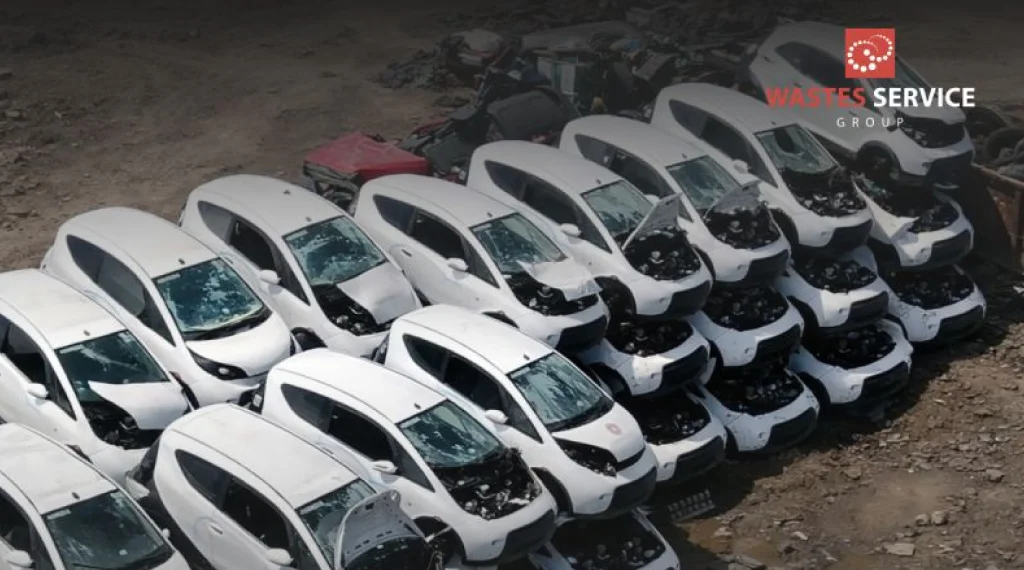
The most important change concerns the obligation to leave the battery in the vehicle when it is scrapped. This means the end of uncontrolled disassembly and selective pulling of the most valuable components out of official circulation. The battery cannot leave the vehicle until it has been completely transferred to a specialized and strictly controlled processing process.
In parallel with the new regulations, China is launching an advanced digital platform that will allow the battery to be tracked at every stage of its life. From the moment of production, through use, to final recycling.
This approach practically eliminates the space for the gray zone, in which part of the used batteries has disappeared so far. Transparency and full traceability are becoming a standard, not an option.
While the changes in China may seem radical, their direction is consistent with planned regulations in Europe, particularly in the context of ELV regulations for end-of-life vehicles.
The obligation to dismantle batteries in a controlled environment and full responsibility for their further processing is the foundation of the future system. The problem is that the current infrastructure in Europe is in many cases not prepared for this.
The existing model of operation of many vehicle dismantling stations ceases to be compatible with the upcoming requirements. The traditional approach based on quick and cheap dismantling of vehicles does not take into account the specifics of traction batteries.
The battery in an electric car is not an ordinary component, but a high-tech and potentially dangerous element that requires appropriate procedures, infrastructure and competence.
In the new market model, specialized processing plants, capable of safely disassembling, diagnosing and further managing batteries, will play a key role.
The changes we are seeing are not a distant vision. This is a process that has already begun and will accelerate with the development of electromobility.
At Wastes Service Group, the need for this transformation has been identified before. At the vehicle recycling conference, it was made clear that full control of the battery from the moment of vehicle recall to recycling will be one of the key elements of the new system.
The new regulations leave no room for half-measures. Companies that do not adapt to technological and operational requirements will not be able to function in the new legal environment.
This is the moment when the industry must decide whether to invest in development and adaptation or risk losing ground in the market.
China's move shows what the future of the global battery recycling market could look like. Full control, digital traceability and elimination of the gray area are becoming the new standard.
Europe is moving in the same direction, but the pace of adaptation will be crucial. The coming years will decide which companies will be able to find their way into the new system and which will fall out of it.
24/9/26
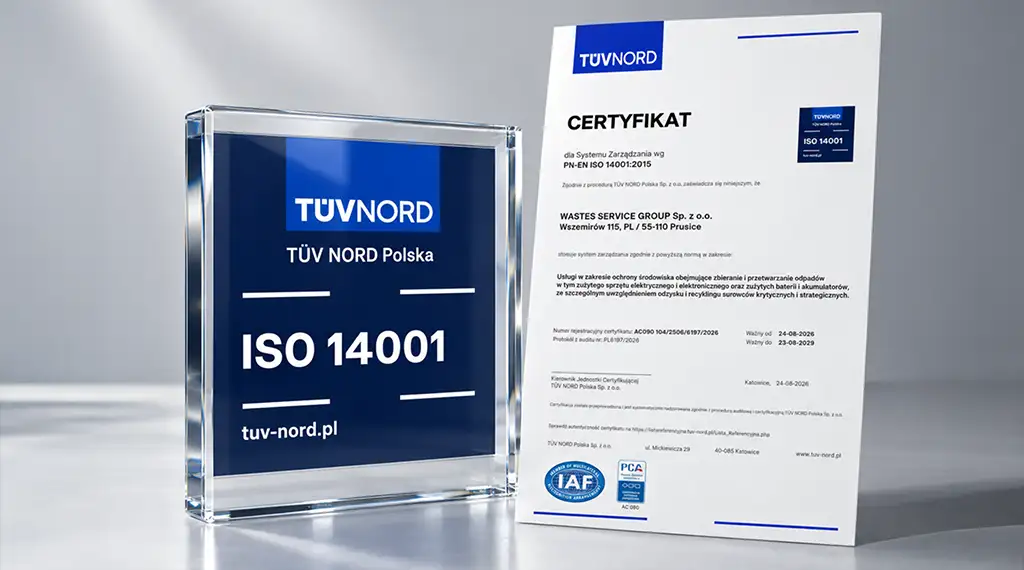
Wastes Service Group has officially achieved the PN-EN ISO 14001:2015 certification awarded by TÜV NORD Polska.