
It promises full transparency across the value chain. For recyclers and second-life operators, however, its real value will depend on the quality and accessibility of the data behind the QR code.
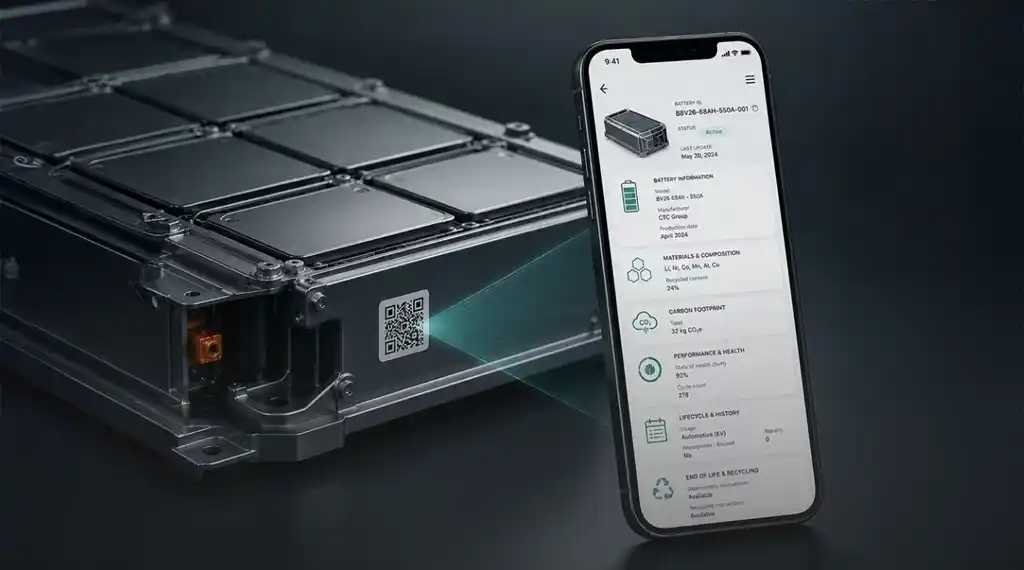
The battery passport is an electronic record linked to an individual battery and accessed via a QR code on the product. It is required under Article 77 of Regulation (EU) 2023/1542 and is designed to track a battery from raw material sourcing and manufacturing through use, repurposing and recycling.
Access is tiered:
At model level, the passport covers:
For each individual battery, the passport also includes dynamic data updated during use, such as state of health (SoH), charge cycles and information on incidents and operating conditions.
For recyclers, the passport solves a real problem. Reliable information on chemistry, design, hazards and dismantling makes it easier to plan safe transport, storage and the right processing route.
Second-life decisions are a different matter. Deciding whether a battery can be reused, refurbished or repurposed for energy storage requires trustworthy, up-to-date data on the condition of that specific unit. The open questions are:
None of this makes the passport less important. It does mean it will complement, not replace, independent diagnostics. Second-life operators will still need testing, and recyclers will still need verified information on what actually arrives at their gate.
Producers and importers of in-scope batteries should already be setting up processes to collect, manage and share passport data. Collection, treatment and recycling operators should plan how passport data will feed into their acceptance, storage and dismantling procedures.
Wastes Service Group specialises in the collection, transport and recycling of spent batteries, including EV and industrial batteries, across Poland and the EU. Get in touch to prepare your business for the new requirements.
When does the EU battery passport become mandatory?
From 18 February 2027 for EV batteries, LMT batteries and industrial batteries above 2 kWh.
Do portable batteries need a battery passport?
No. Portable batteries and SLI (starter) batteries are outside the scope of the requirement.
Does the battery passport include state of health data?
Yes. Individual-battery data, including state of health, is updated during use, but only persons with a legitimate interest can access it.
24/9/26
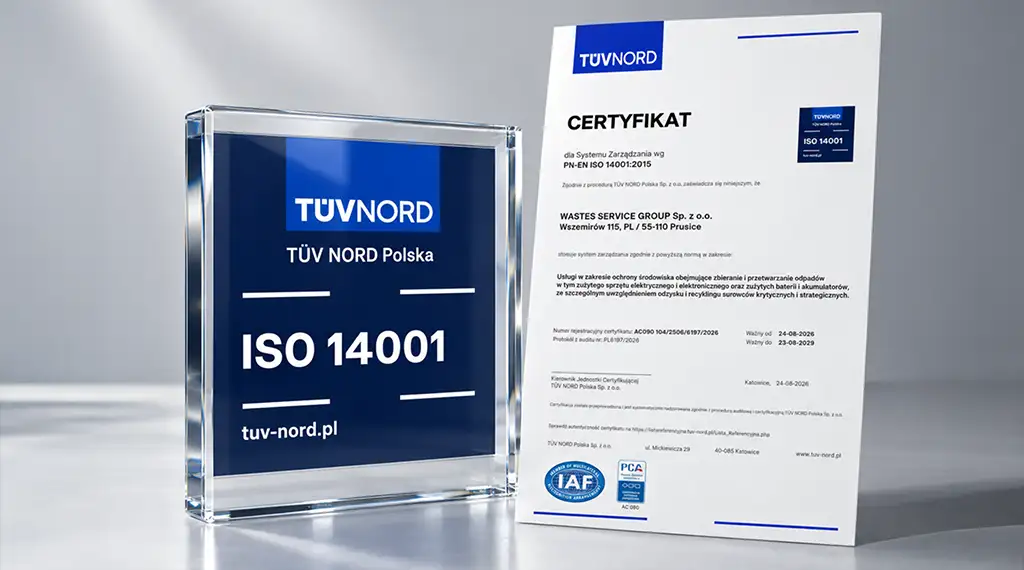
Wastes Service Group has officially achieved the PN-EN ISO 14001:2015 certification awarded by TÜV NORD Polska.