

This comprehensive approach covers the entire lifecycle of a product, from production, through use, to recycling and recovery of strategic raw materials.
This change does not only apply to legal regulations. This is a real market transformation that affects manufacturers, importers, logistics companies and battery processors.
Wastes Service Group has been developing its services in a direction consistent with these changes for years, building an offer tailored to the requirements of the circular economy.
The new regulations of the European Union place great emphasis on the responsibility of those who put batteries on the market. It is at this stage that the entire life cycle of a product from the point of view of regulatory compliance begins.
The Wastes Service Group, through the company Green Recovery, supports producers and importers in fulfilling their legal obligations. This includes both current requirements and preparation for future regulations that will be implemented under the new Polish Battery Act.
This allows companies to focus on their operational activities, confident that they meet all legal requirements.
The Battery Regulation promotes the Design for Recycling and Design for Circularity approach. This means designing products in such a way as to take into account the future dismantling and recovery of materials already at the stage of their creation.
Wastes Service Group offers traction battery dismantling services and detailed verification of the condition of individual modules. If battery components are safe to reuse, they can be reused instead of being recycled directly.
This approach allows you to maximally extend the life cycle of components and reduce the consumption of raw materials.
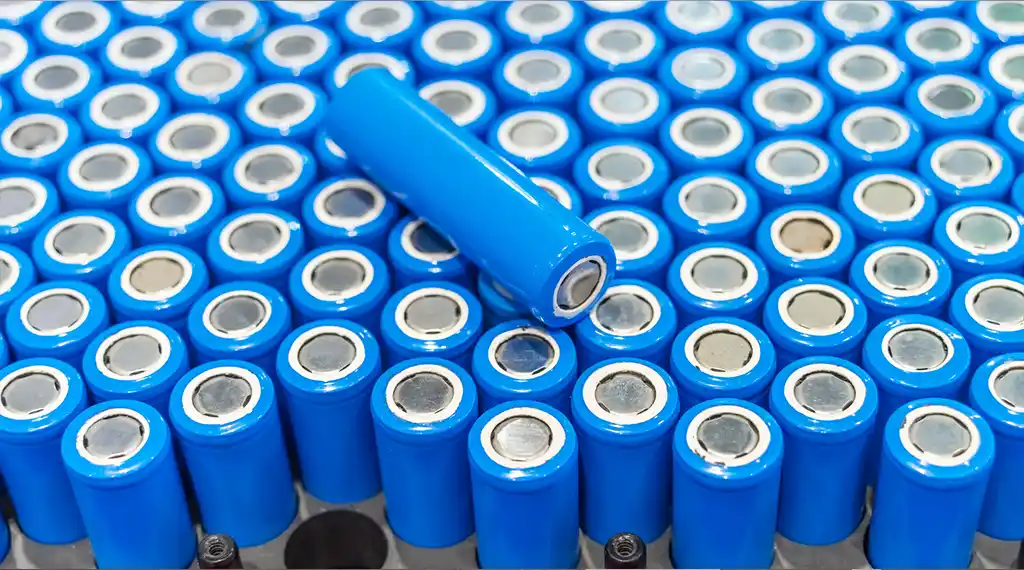
With the development of electromobility, the need for efficient processing of batteries from electric vehicles is increasing. European Union regulations require full control of this process and greater transparency throughout the value chain.
Wastes Service Group has a dedicated line for the dismantling of traction batteries, which allows servicing batteries from BEV, PHEV and HEV vehicles.
Semi-automatic processes allow components to be safely separated and prepared for further recycling, while minimizing operational risks and increasing the efficiency of the entire process.
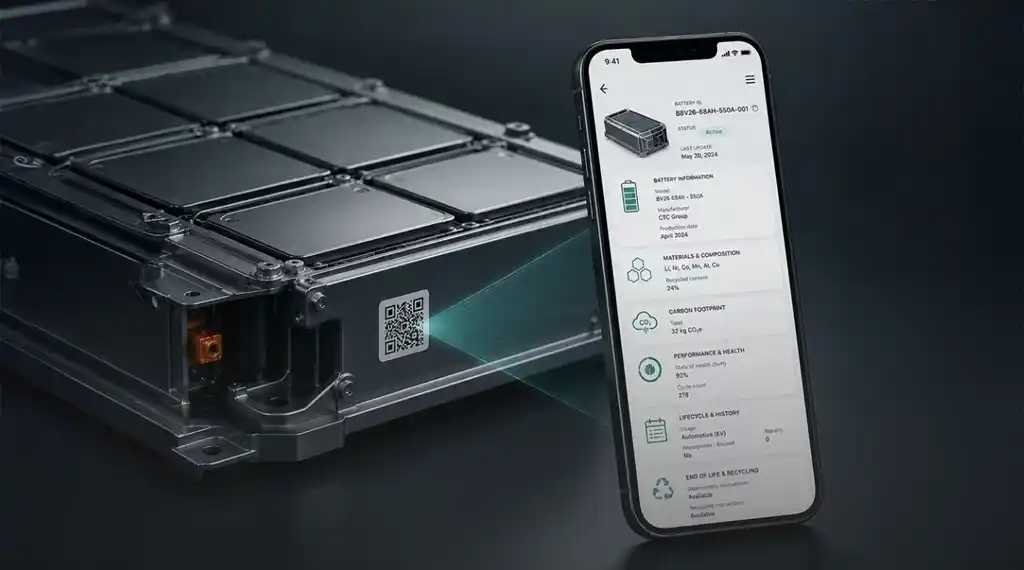
One of the key elements of the new regulations is traceability of materials and access to reliable data. Digital product passports and complete documentation are becoming the industry standard.
Wastes Service Group supports its customers in the preparation of the necessary information and documents, enabling them to smoothly pass through the requirements related to material identification and tracking of the flow of raw materials.
This is not only a question of compliance, but also of greater transparency and control over processes.
The Battery Regulation lays the foundation for the development of the circular economy and reinforces Europe's quest for raw material independence.
Wastes Service Group sees its role more broadly than just as a recycling entity. It is a partner supporting the entire ecosystem, from manufacturers and importers, through logistics, to the industry using recycled materials.
This approach makes it possible to have a real impact on the development of the market and build a more sustainable economic model.
The new battery regulation is changing the rules of the game in the European market. It introduces greater accountability, transparency and new standards in battery design and processing.
For companies, this is the moment when it is worth moving from reacting to regulations to consciously building a competitive advantage.
If you want to see what the Wastes Service Group's approach to the new regulations and circular economy looks like in practice, we invite you to read the presentation.
24/9/26
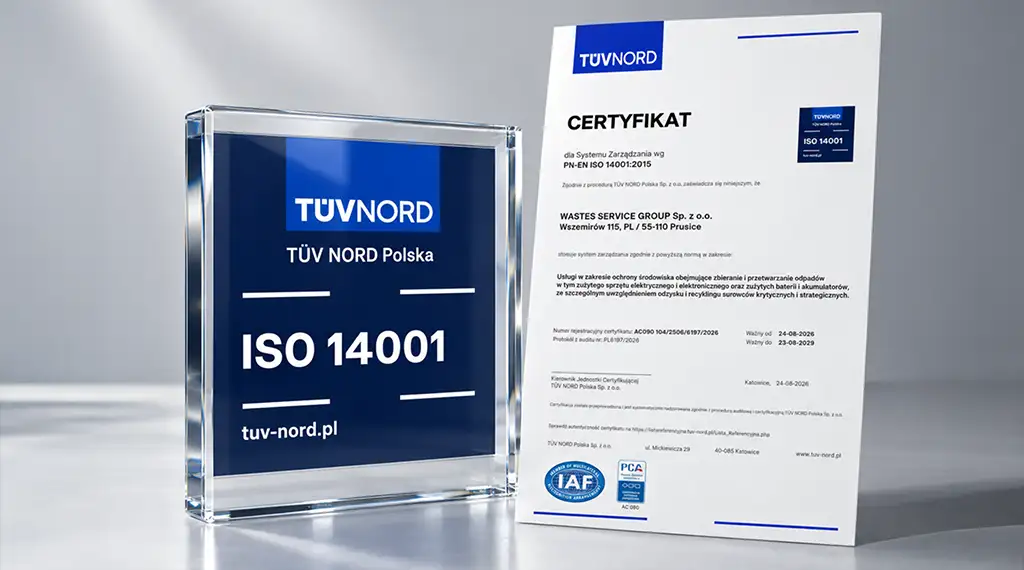
Wastes Service Group has officially achieved the PN-EN ISO 14001:2015 certification awarded by TÜV NORD Polska.