
At CES 2026, LEGO announced the biggest change to its system in nearly 50 years. The LEGO Smart Play platform is designed to bring building blocks to life without the use of screens and classic digital interfaces.
For fans of technology, this is an exciting innovation. For the waste management industry, an important signal of change that raises the question: how will this affect the future stream of electrical and electronic waste?
The new “Smart Brick” retains the form of a classic 2x4 brick, however, inside there is advanced electronics:
• microprocessor
• accelerometer
• light and sound sensors
• battery with wireless charging
Bricks can communicate with each other, react to movement and emit sounds. That is, a traditional plastic product becomes an electronic device at the same time.
From the point of view of the EUSR legislation, the case is clear. Toys integrated into electronics are qualified as used electrical and electronic equipment.
It will not be possible to dispose of such a block either in plastic or in mixed waste. The used Smart Brick will have to go to the electrowaste collection system. Throwing it into a regular trash can result in administrative sanctions.
Classic LEGO bricks are made of ABS, a material that is durable and of high quality, but requires proper processing conditions. The addition of microchips, wires and batteries significantly complicates the recovery process.
Recycling such a product requires:
• disassembly or mechanical separation
• Separation of plastic from metals and electronic components
• safe battery management
This means a more complex technological process and higher processing costs.
One of the biggest advantages of LEGO is intergenerational compatibility. Bricks from the 70s still fit into modern sets. The electronics built into Smart Brick, however, raise the question of its service life.
Will the microprocessor and battery last several decades of use? If not, smart blocks can end up in the waste stream much faster than classic components.
LEGO has been communicating ambitious environmental goals for years, including the introduction of paper packaging and recycled materials such as ARMabs. Smart Play, however, shows a broader market trend — blurring the line between toy and electronic equipment.
From the point of view of the circular economy, this means the need to:
• Product design for easy disassembly
• taking into account the future recovery of materials already at the design stage
• expansion of systems for collection and processing of small-scale EEZs
The electronization of everyday products, even as traditional as building blocks, is causing the flow of electro-waste to expand into new categories. This is a regulatory, technological and logistical challenge.
At Wastes Service Group, we will closely monitor the development of this market segment. Technological innovations are inevitable, but their long-term impact on waste treatment systems depends on whether the product design takes into account the full life cycle.
The premiere is scheduled for March 1, 2026. The question remains open: are smart toys a natural direction of development or an environmental challenge for which we are not yet fully prepared?
24/9/26
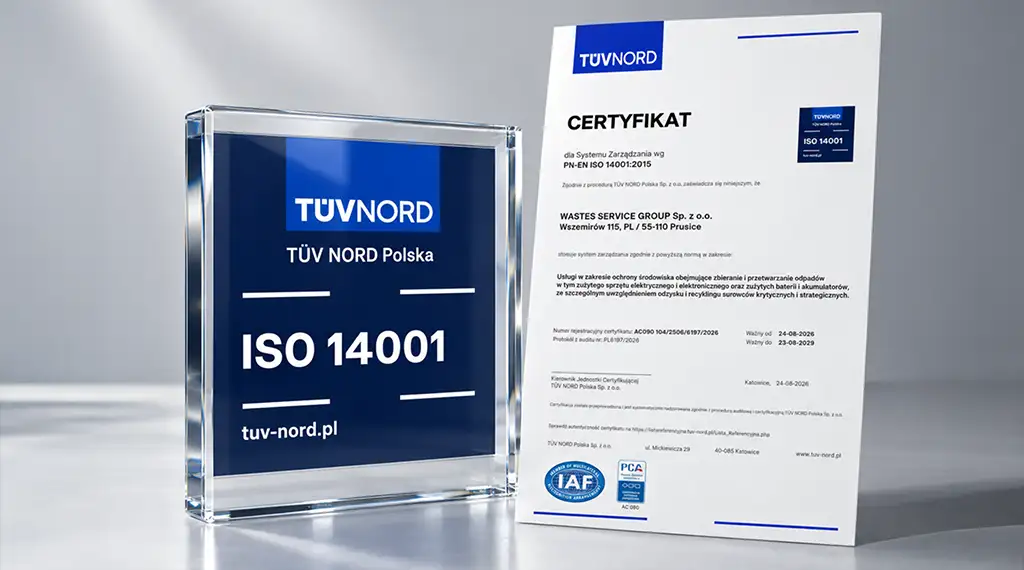
Wastes Service Group has officially achieved the PN-EN ISO 14001:2015 certification awarded by TÜV NORD Polska.