
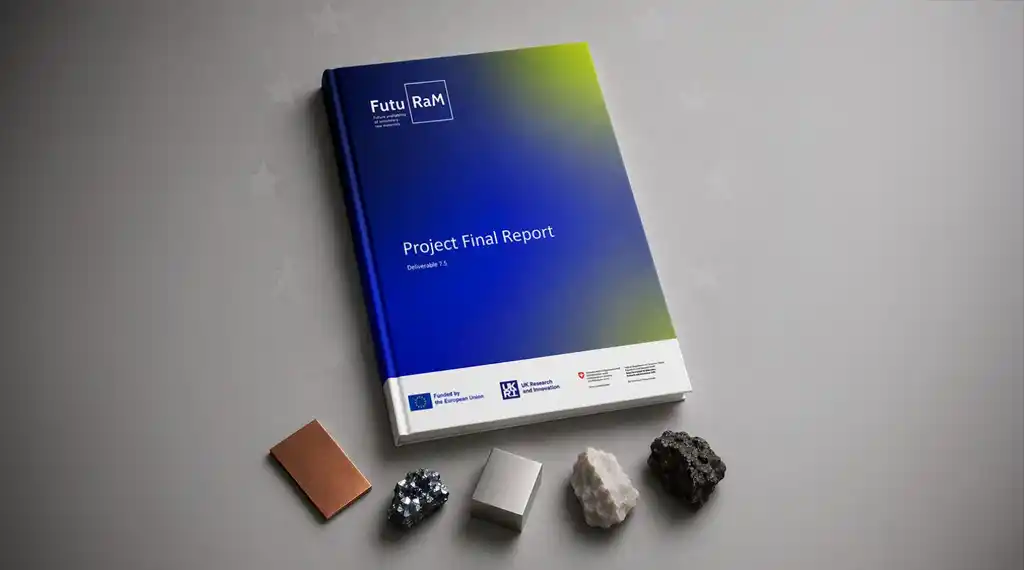
According to the final FutuRaM report published on 27 May 2026, waste could meet between 33% and 56% of Europe's critical raw material demand by 2050.
FutuRaM is a four-year, EU-funded Horizon Europe project. It quantified 42 critical raw materials across seven waste streams: WEEE, waste batteries, end-of-life vehicles, construction and demolition waste, slags and ashes, mining waste and dismantled wind turbines. The analysis covers the EU27 plus the UK, Switzerland, Iceland and Norway.
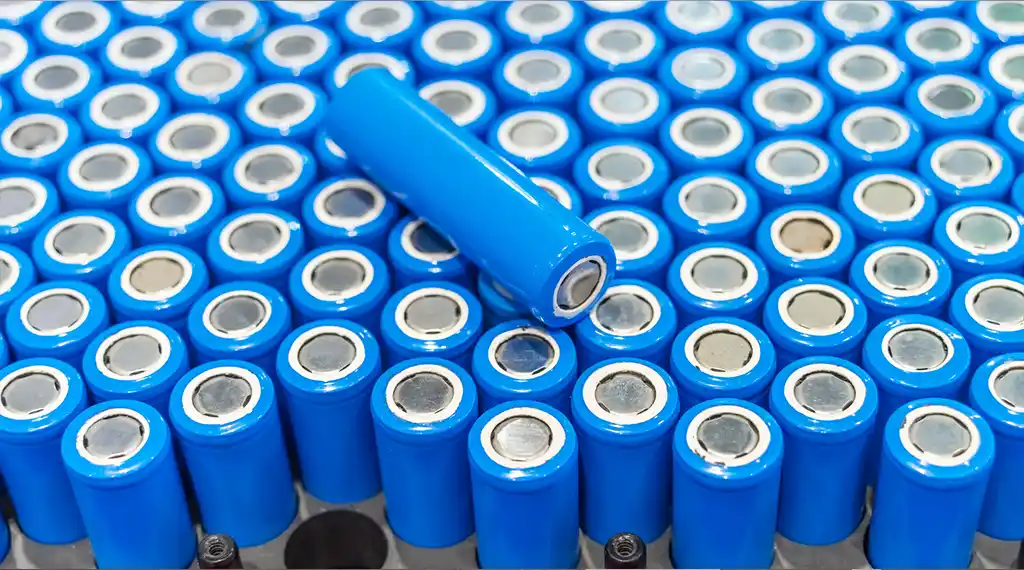
The report estimates that Europe could recover 4.1 to 5.7 million tonnes of critical raw materials per year from waste. The biggest jumps are in battery metals:
Replacing primary extraction with secondary materials could also avoid 81 to 273 million tonnes of CO2 equivalent per year.
The final figure depends on which path Europe takes:
The gap between 33% and 56% is not a technology gap alone. It comes down to collection rates, treatment capacity and whether end-of-life products reach licensed recyclers at all.
The EU Critical Raw Materials Act sets a benchmark for recycling to cover at least 25% of the EU's annual consumption of strategic raw materials by 2030. FutuRaM shows that the urban mine is large enough to make this realistic, provided spent batteries and electronics are collected and processed through controlled channels rather than lost to mixed waste or informal markets.
Wastes Service Group supports this shift through the collection, transport and recycling of batteries and WEEE in Poland and across the EU. Get in touch to find out how we can help your business turn end-of-life products into secondary raw materials.
What is urban mining?
Urban mining is the recovery of raw materials from products and waste, such as electronics, batteries and vehicles, instead of extracting them from natural deposits.
How much of Europe's critical raw material demand could waste cover?
Between 33% and 56% by 2050, depending on the scenario, according to the FutuRaM final report.
How much lithium could Europe recover from waste?
30,000 to 52,000 tonnes per year by 2050, up from well below 1,000 tonnes today.
12/10/26
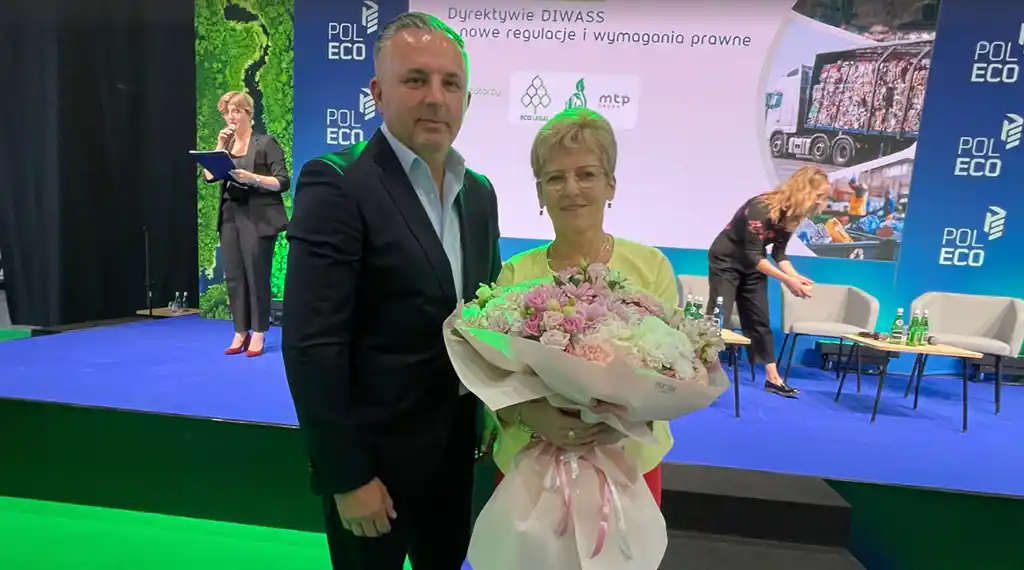
From 6 to 8 October 2026, the Wastes Service Group and Green Recovery teams attended POLECO in Poznań, one of Central and Eastern Europe's leading trade fairs for environmental protection and waste management.